
Sie möchten die Tour lieber auf Deutsch erleben? Klicken Sie hier.
HORTUS Fact #2 – Radical Sustainability
From Vision to Mission
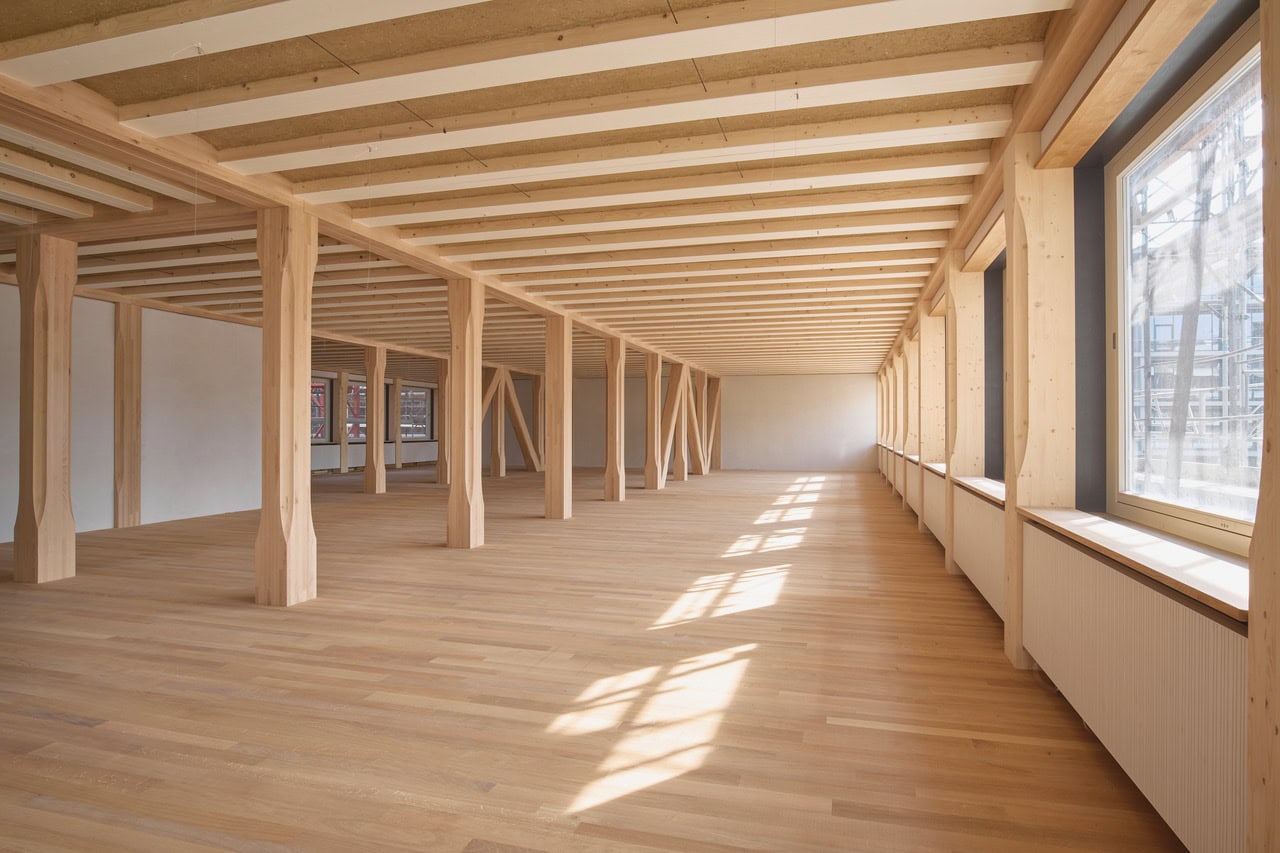
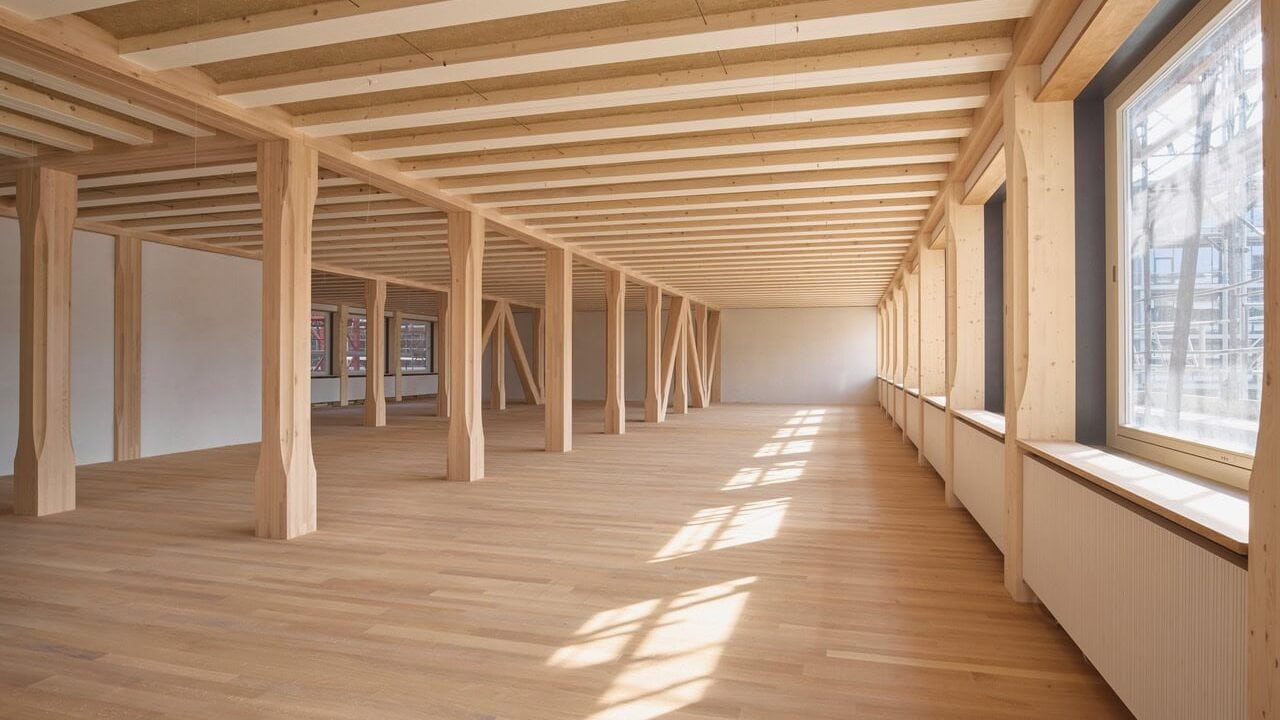
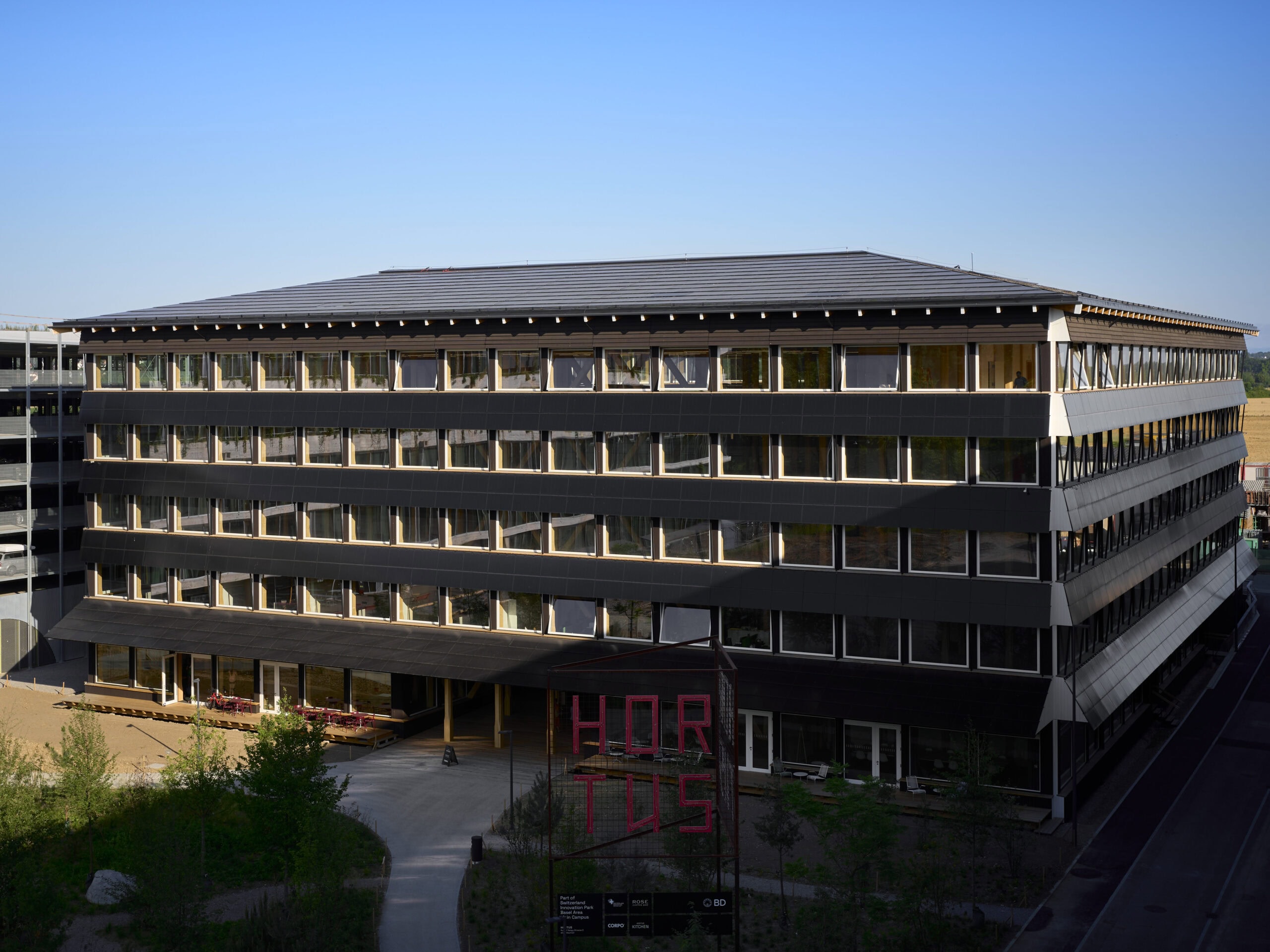
The vision was to create a building that would pay back its embodied non-renewable energy within a single generation and become energy-positive after 30 years. To achieve this radical sustainability goal and turn utopia into reality, interdisciplinary teams from SENN, Herzog & de Meuron, ZPF Ingenieure, Blumer Lehmann and the clay specialists at Lehm Ton Erde worked intensively together. Developing the innovative ceiling, made from timber and rammed earth, took around seven months before it met the ambitious requirements, including strict fire safety regulations.
Go local
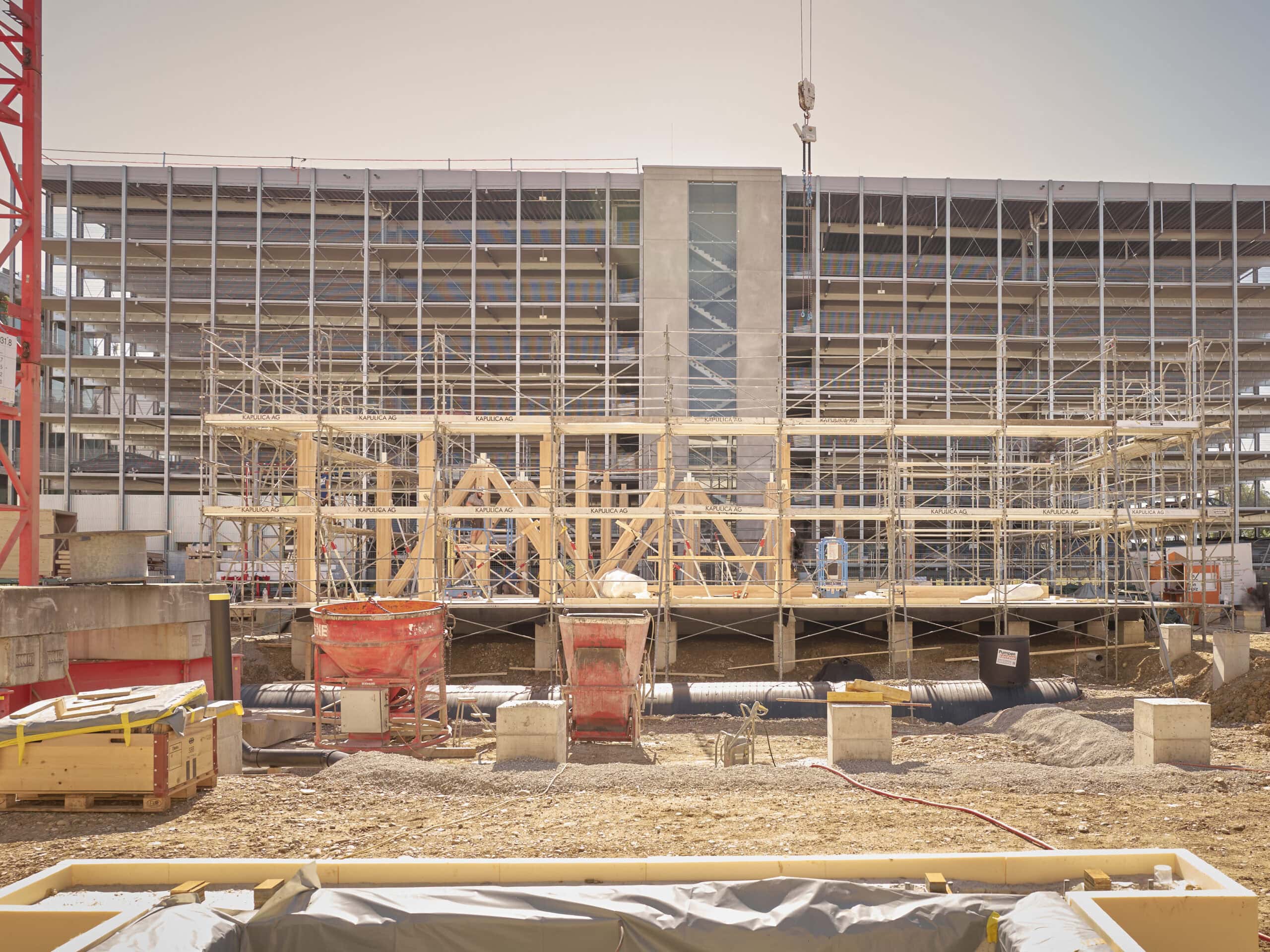
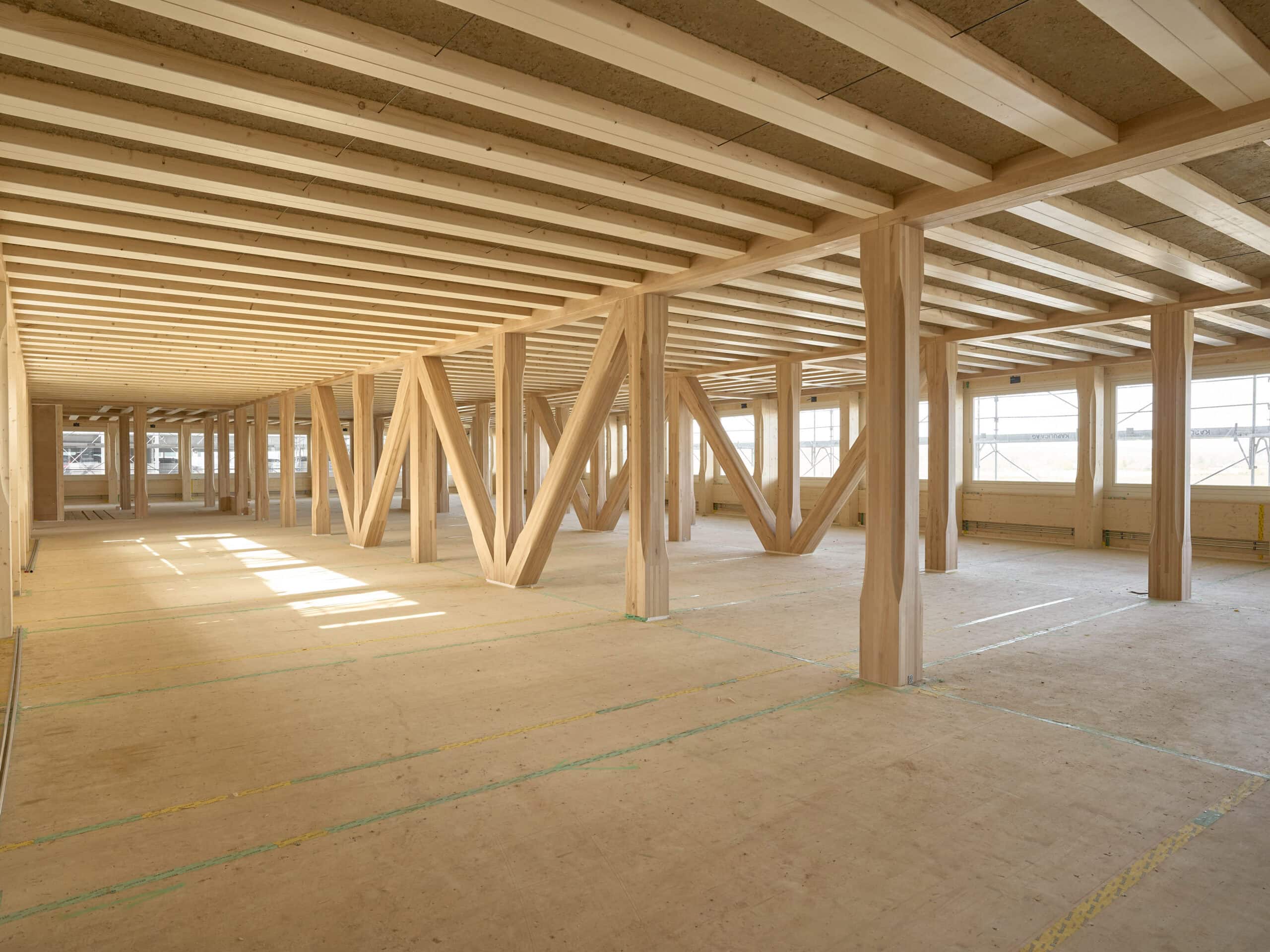
As a CO₂-intensive building material responsible for around 10% of global greenhouse gas emissions, concrete was omitted from HORTUS wherever possible. The only exception are the short piles driven into the groundm on which the building stands. Unlike a full basement, their carbon footprint is negligible. Instead of concrete, local materials such as timber, rammed earth, and recycled paper were used. The ceiling elements of HORTUS account for only about 7.5% of the building’s total CO₂ emissions. In comparison, a conventional reinforced concrete flat slab would contribute roughly three times as much (around 25% of total emissions).
From the earliest sketches, HORTUS was envisioned as both radically sustainable and structurally resilient. Switzerland’s seismic safety standards demanded a design that could absorb and dissipate earthquake forces, while the goal for HORTUS was to make this possible without excessive material use. The timber-framed structure is anchored on minimal concrete point foundations, allowing the building to effectively “float” above ground. ZPF Ingenieure had to do a lot of preparatory work to determine the exact dimensions of the wooden beams required. It’s complemented by rammed-earth ceiling elements, produced locally from the site’s own excavated clay, which provide stability.
The result is a building that demonstrates that sustainable construction can meet the high standards that apply in our industry.
You can find more information here: https://www.herzogdemeuron.com/projects/543-hortus/
You can find the next QR code here: